 A2L
A2L

From technology to market · Based in Switzerland, active internationally
Building the company around a technology, to turn it into real Innovation.
For 15 years, A2L has been the vehicle through which I take executive responsibility in technology companies: on the executive team or in the CEO role, from early-stage ventures to established industrial operations.
The journey
A technology becomes an Innovation only once it reaches the market, or is used in practice.
Until then, it remains a promise. From an idea to a product a customer pays for, there are several valleys of death to cross. Each one calls for a different discipline, and speed is won or lost at the handovers.
Bringing an invention to the market means building the company around it: the industrial capability, the organisation, the protection and the business model.
This kind of construction impacts the shape of the organisation itself, which makes it the responsibility of executive management.
How I work
Fractional, not partial.
Fractional describes how much of my time a company has, not how much of my attention. On the executive team or in the CEO role, accountable for the outcome, and in several cases also a shareholder.
Any executive role can be held full-time or fractionally. What changes is the cadence, not the accountability.
What I bring in either form is the full journey from technology to market, and the organisation that carries it.
Examples of mandates
Micro-fluidics, marine infrastructure, blood sampling, deep geothermal energy, drug delivery.
Member of the executive team. The patent portfolio generates licensing revenue, and 3 spin-offs were created on IP transfers he elaborated.
Co-inventor of the founding patents. From a miniature model to a full-size prototype on Lake Neuchâtel, with the business model, the financing and the Canadian market behind it.
On the executive team from day one, in support of medical devices that democratise blood sampling and self-injection.
Core-team member of a Swiss deep-geothermal venture, alongside the founders, the board and the technical advisors.
A venture project of his own, to remove the manual handling still required to reconstitute lyophilised drugs, a source of contamination risk and dosing errors.
Further mandates of the same nature are carried out under confidentiality agreements.
Biography
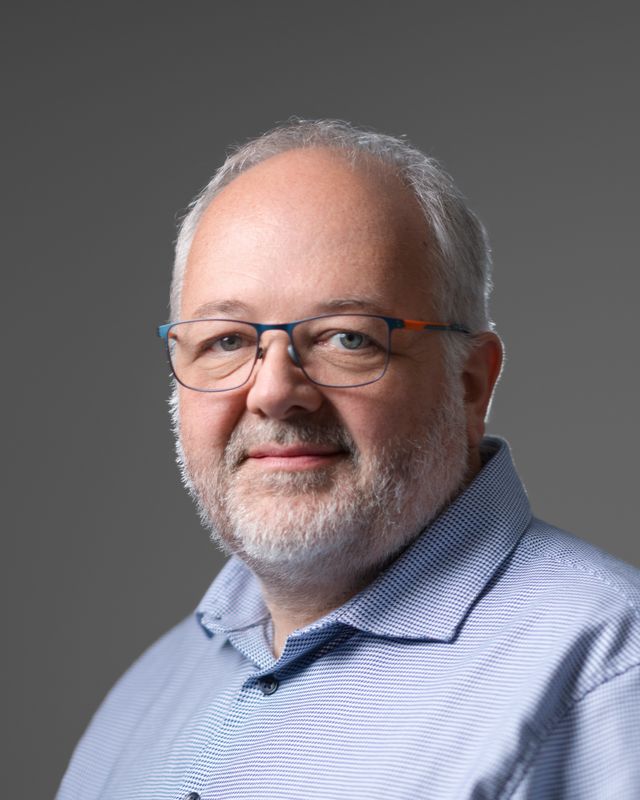
Alain Jaccard
Founder, CEO
Alain Jaccard builds companies around technologies that have proven their promise but not yet their ability to scale: the industrial capability, the organization, the protection and the business model. 30 years in Swiss export industry, 14 at C-level, in microtechnology, industrial automation, automotive, watchmaking, medical devices, consumer appliances at mass scale, and marine infrastructure. Operations and partners across Europe, Asia, Africa and North America.
ETEL, 1995. The company sold only custom-made motors, and decided to add a standard product line. As the only German speaker, at 23, he was mandated for the German market. He elaborated the motor ranges, optimized on the basis of the available production equipment, and set the pricing policy. He personally explained direct drives to R&D managers in German across the whole country and managed the sales process. Within 2 years standard motors were ETEL's largest business stream and Germany its largest market. He was called back twice: in 1999 to train the worldwide sales force, and in 2003 to design "Concevoir", the development process that halved project duration and is still in use today.
MEDAIR, 1998-2001. Twice in that period he left industry: 2.5 years of emergency humanitarian operations in conflict zones (Sudan, Albania, DR Congo), leading 200 people across 3 sites at the age of 27.
Sonceboz, 2002-2003. He delivered the company's first 2 fully automated assembly lines for automotive instrumentation, an investment of more than CHF 3.5 mio. He took over part of the supplier's project management when that supplier went nearly bankrupt and was acquired mid-project.
Nespresso, 2007 to 2011. The company had been growing 30% a year for more than 10 years, and the established development network was unable to follow. He installed an additional development capability, including a test lab, with a new partner in Lyon and a direct link to the OEM in China. It was operational within 6 months. He was then promoted to Technology Innovation Manager, although his peers and his own manager were more senior in the company: 8 to 11 people, CHF 12 mio a year, and a seat on the IP Decision Committee.
Preciflex, 2012. He was hired as first employee while the company was only a postal address with external partners. Its client HYT had taken pre-orders for a watch whose 2 prototypes were barely functional. Within 6 weeks he proposed to verticalize the key processes and the Board accepted it. Less than 6 months later, HYT was able to deliver its first 28 watches. After 12 months the production and industrialization departments were set up (13 employees) with a capacity of 1000 modules per year. 5 patent families protected the know-how built through industrialization. As Chief Innovation Officer from 2017, member of the executive team, he took over innovation and intellectual property: the portfolio generates licensing revenue and even the largest actors of luxury and watchmaking come to the company for technology developments. He leads the IP committee that brings together the president of the Board and the executive team. 3 spin-offs (PreciHealth, Hulecos, Combi-DX) were created on IP transfers he elaborated.
SeaNest, 2021 to 2026, as co-inventor of the founding patents and Chief Executive Officer. He took the company from a miniature model to a real-life prototype, launched on Lake Neuchâtel and presented publicly before the cantonal authorities, with regional media coverage. The prototype withstood winds of 140 km/h without damage. He designed the business model on the IP itself: bidirectional licensing with construction consortia. He obtained financing through capital increases, convertible loans and national & cantonal grants. Through 2 economic missions of the Canton of Neuchâtel, he qualified Canada not only as an industrialization location but also as a market, and built the partner network there.
Since 2011 he has run his own practice, A2L Consulting, full-time since 2020, with 5 to 10 parallel mandates, most of them as Chief Innovation Officer and member of the executive team, and in some cases also as shareholder.
MSc EPFL in microengineering, PMP, Harvard Business School Certificate of Management Excellence, Startup Board Academy. Named inventor in 46 published patent families. Swiss citizen, works in French, English and German.
De la technologie au marché · Basé en Suisse, actif à l'international
Construire l'entreprise autour d'une technologie, pour en faire une véritable Innovation.
Depuis 15 ans, A2L est le véhicule par lequel je prends des responsabilités exécutives dans des entreprises technologiques: dans la direction ou à sa tête, de la jeune pousse à l'opération industrielle établie.
Le parcours
Une technologie ne devient une Innovation qu'une fois mise sur le marché, ou mise en pratique.
Jusque-là, elle n'est qu'une promesse. D'une idée à un produit qu'un client paie, il y a plusieurs vallées de la mort à traverser. Chacune appelle un métier différent, et la vitesse se gagne ou se perd aux passages de témoin.
Amener une invention sur le marché, c'est construire l'entreprise autour d'elle: la capacité industrielle, l'organisation, la protection et le modèle d'affaires.
Une telle construction touche à la forme même de l'organisation, et c'est ce qui en fait la responsabilité de la direction générale.
Ma manière de travailler
Fractionné dans le temps, entier dans l'engagement.
Le fractionnement porte sur mon temps, pas sur mon engagement. Dans la direction ou à sa tête, responsable du résultat, et dans plusieurs cas aussi actionnaire.
Tout rôle exécutif peut être tenu à plein temps ou de manière fractionnée. Ce qui change, c'est le rythme, pas la responsabilité.
Ce que j'apporte, quelle que soit la forme, c'est le parcours complet de la technologie au marché, et l'organisation qui le porte.
Exemples de mandats
Microfluidique, infrastructures marines, prélèvement sanguin, géothermie profonde, administration de médicaments.
Membre de la direction. Le portefeuille de brevets génère des revenus de licence, et 3 spin-offs sont nées de transferts de PI qu'il a élaborés.
Coinventeur des brevets fondateurs. D'une maquette à un prototype grandeur nature sur le lac de Neuchâtel, avec le modèle d'affaires, le financement et le marché canadien derrière.
Membre de la direction depuis le premier jour, au service de dispositifs médicaux qui démocratisent le prélèvement sanguin et l'auto-injection.
Au cœur de l'équipe d'une deeptech suisse de la géothermie profonde, aux côtés des fondateurs, du conseil et des conseillers techniques.
Son propre projet d'entreprise, pour supprimer la manipulation manuelle encore nécessaire à la reconstitution des médicaments lyophilisés, source de risque de contamination et d'erreurs de dosage.
D'autres mandats de même nature sont conduits sous accord de confidentialité.
Biographie
Alain Jaccard
Fondateur, CEO
Alain Jaccard construit les entreprises autour de technologies qui ont fait la preuve de leur promesse, mais pas encore de leur capacité à passer à l'échelle: la capacité industrielle, l'organisation, la protection et le modèle d'affaires. 30 ans dans l'industrie suisse d'exportation, dont 14 comme membre de la direction, en microtechnique, automatisation industrielle, automobile, horlogerie, dispositifs médicaux, électroménager de grande série et infrastructures marines. Opérations et partenaires en Europe, en Asie, en Afrique et en Amérique du Nord.
ETEL, 1995. L'entreprise ne vend que des moteurs sur mesure et décide d'ajouter une ligne de produits standards. Seul germanophone de la maison, à 23 ans, il se voit confier le marché allemand. Il élabore les gammes de moteurs, optimisées sur la base des moyens de production disponibles, et fixe la politique de prix. Il explique lui-même les entraînements directs aux responsables de développement, en allemand, dans tout le pays, et conduit le processus de vente. En 2 ans, les moteurs standards deviennent la première activité d'ETEL et l'Allemagne son premier marché. Il est rappelé deux fois: en 1999 pour former la force de vente mondiale, et en 2003 pour concevoir «Concevoir», le processus de développement qui divise par deux la durée des projets et reste en usage aujourd'hui.
MEDAIR, 1998-2001. À deux reprises durant cette période, il quitte l'industrie: 2,5 ans d'opérations humanitaires d'urgence en zones de conflit (Soudan, Albanie, RD Congo), à la tête de 200 personnes sur 3 sites, à 27 ans.
Sonceboz, 2002-2003. Il livre les 2 premières lignes d'assemblage entièrement automatiques de l'entreprise, pour l'instrumentation automobile, un investissement de plus de 3,5 MCHF. Il reprend une partie de la gestion de projet du fournisseur lorsque celui-ci frôle la faillite et est racheté en cours de projet.
Nespresso, 2007 à 2011. L'entreprise croît de 30% par an depuis plus de 10 ans, et le réseau de développement existant ne suit plus. Il installe une capacité de développement supplémentaire, laboratoire d'essais compris, avec un nouveau partenaire à Lyon et un lien direct avec l'OEM en Chine. Elle est opérationnelle en 6 mois. Il est ensuite promu Technology Innovation Manager, alors que ses pairs et son propre supérieur avaient plus d'ancienneté: 8 à 11 personnes, 12 MCHF par an, et un siège au comité de décision PI.
Preciflex, 2012. Il est engagé comme premier employé, alors que l'entreprise n'est qu'une adresse postale et des partenaires externes. Son client HYT a pris des précommandes pour une montre dont les 2 prototypes fonctionnent à peine. En 6 semaines, il propose de verticaliser les procédés clés et le conseil l'accepte. Moins de 6 mois plus tard, HYT peut livrer ses 28 premières montres. Après 12 mois, les départements production et industrialisation existent (13 employés), avec une capacité de 1000 modules par an. 5 familles de brevets protègent le savoir-faire né de l'industrialisation. Chief Innovation Officer dès 2017, membre de la direction, il reprend l'innovation et la propriété intellectuelle: le portefeuille génère des revenus de licence et les plus grands acteurs du luxe et de l'horlogerie viennent à l'entreprise pour des développements technologiques. Il conduit le comité PI qui réunit le président du conseil et la direction. 3 spin-offs (PreciHealth, Hulecos, Combi-DX) naissent de transferts de PI qu'il a élaborés.
SeaNest, 2021 à 2026, comme coinventeur des brevets fondateurs et Chief Executive Officer. Il mène l'entreprise d'une maquette à un prototype grandeur nature, mis à l'eau sur le lac de Neuchâtel et présenté publiquement devant les autorités cantonales, avec une couverture médiatique régionale. Le prototype résiste à des vents de 140 km/h sans dommage. Il conçoit le modèle d'affaires sur la PI elle-même: une licence bidirectionnelle avec des consortiums de construction. Il obtient le financement par augmentations de capital, prêts convertibles et subventions fédérale et cantonale. Par 2 missions économiques du Canton de Neuchâtel, il qualifie le Canada non seulement comme lieu d'industrialisation mais aussi comme marché, et y construit le réseau de partenaires.
Depuis 2011, il dirige sa propre structure, A2L Consulting, à plein temps depuis 2020, avec 5 à 10 mandats en parallèle, le plus souvent comme Chief Innovation Officer et membre de la direction, et dans certains cas également comme actionnaire.
MSc EPFL en microtechnique, PMP, Harvard Business School Certificate of Management Excellence, Startup Board Academy. Inventeur cité dans 46 familles de brevets publiées. Citoyen suisse, travaille en français, anglais et allemand.